

1·
4 days agoI’m not sure there is such a thing when you’re talking about managing a wealth trust across generations. Practices that apply today could be outdated even before your death to say nothing about market/taxation across generations.
I’m not sure there is such a thing when you’re talking about managing a wealth trust across generations. Practices that apply today could be outdated even before your death to say nothing about market/taxation across generations.
My goal in this thread is to discuss setting this so that no one ever needs to work again in my family. I think they should work, but should be allowed to pursue low paying jobs that benefit society and the Earth.
Gotcha. You should look at the history of those few families that achieve that. Many times isn’t sustainable. Not because it isn’t numerically possible, but by about the 3rd generation, they are too far removed from the concept of scarcity they lose the ability to manage the family fortunes well enough and lose it all by overspending.
Check out how the Vanderbilt fortune evaporated over a few generations.
On the plus side, ACATS is the feature/technology that makes moving brokerages so easy. I’ve got an account move in flight right now, and it took all of about 10 minutes to initiate. If you want out of Schwab you can probably ditch them if you like. If you’re holding securities (stocks, bonds, etc), as long as they are transferable you can do an in-kind transfer (so the security never get sold to cash) and therefore there’s no taxable event during the transfer.
Does it count as Generational Wealth if future generations must contribute?
I would certainly think so. Money is fungible.
Lets say your grandfather gave your father $10,000 in your father’s teen years, and your father used that to launch into adulthood successfully. Your father grows his own wealth while living, but also gives you (the inflation adjusted) $10,000 to you in your teen years just as his father did for him. Since money is fungible, and your father wasn’t penniless when he have you money, that $10,000 effectively came from your grandfather.
You are correct, and I agree what what you are saying. I had hoped my last paragraph would imply my feels on my actual position and to counter the focused brevity.
I read that and thought those statements doubled down on your definition of generational wealth being only from a family’s progenitor, and not also contributed to by their offspring.

No worries!
At 2 children per household, the number of households being supported grows at a larger rate than reasonable investment gains. The tripling time at 4% real gain is 28.01 years.
This statement seems to suggest your thinking is that your wealth today will be the only wealth ever introduced to the system. While that’s possible, it isn’t usually how generational wealth works I think. Each of your successors also adds to the wealth with their own efforts and endeavors.
The most important time in their lives for people to have wealth isn’t at the end, but at the beginning. Education is expensive, housing is expensive. Initial opportunities require money when you’re young. Once you’re established, you have your own resources to continue to grow.
I gave the proper definition of the acronym where the article did not. I’m not making commentary on the article topic.

So a couple of things. Just so ya know, when The Onion started in the late 1980’s and early 1990’s, it did not loudly announce itself as satire the way people view it now. Early print issues were laid out exactly like a local newspaper.
Yep, I know. If you were riding the DC Metro in those days you’d find the paper edition in paper dispensers right next to the Washington Post and the Wall Street Journal (pre-Murdoch ownership). I think I may have a couple of the old ones in a box somewhere.
You’re also wrongly assuming satire must: Be obviously humorous.
I never assumed satire had to be humorous. I said the Onion was satire, and it was humorous.
We’re Twilight Zone/Black Mirror,/J.G. Ballard/early cyberpunk (before the game) journalism, not current era Onion listicle satire.
You’re making my point for me. All of those sources were known to the consumers as fiction and allowed to consumer to compare reality against that speculative future. You’re not doing that. You are well aware that most folks that read what you’re writing assume its true. You can’t have it both ways.
And let’s not overlook the fact that tomorrow or the day after, or soon, many of my articles will no longer be fiction.
I think you’ve moved beyond satire and are headed toward disinformation now.
tl;dr: Explaining the joke, ruins the joke.
Well hang on, you just said your intent wasn’t humor. Wouldn’t that make your actions humor at the expense of people reading what you’re making up?
Can I ask what your goal is? You’re referencing the Onion which is a satire site. The Onion’s goal is to entertain, and provide some social commentary with the protection of satire. Also with the Onion, it is well known it is satire. Readers are “in on the joke”. Your description from the sidebar doesn’t look like that.
The way I read your sidebar message is that all (most?) news in the world is fake and that no news from any source should be trusted at all. It also reads like you’re taking joy it deceiving the readers. The sidebar language suggests no one should trust anything. Am I taking your wrong message or is that what you intended?

For the 2040s, if the pattern holds, local compute power will be come dirt cheap again, and there will be very few reasons to pay someone else to host your compute power remotely. Maybe it will be supercomputers on everyone’s wrist or something.
Its slightly worse than you may think. Prior to about a year ago there were no mechanisms available to block this type of attack from a thief from any of the big three brokerages. I give a lot of credit to Fidelity for not only developing a tool, but making it easily user accessible through the customer’s web session.
Six months ago Vanguard also had no mechanism. However between then and now, they’ve at least developed a process on the backend to put the functionality in place, but they have yet to make a tool that can enable it from the customer’s web session. So while its a bother to call in (and many Vanguard agents don’t know about it yet like the one I initially talked to), I appreciate there is an avenue to put the block on now instead of just hoping and praying the theft doesn’t happen to you. I fully expect Vanguard to make accessing the tool much easier to turn it on an off in the near future.
Schwab hasn’t even built an internal tool yet, so phone call or not, all those customers are still at risk.
So, what prediction did Bezos make back then, that seems particularly poignant right now? Bezos thinks that local PC hardware is antiquated, and that the future will revolve around cloud computing scenarios, where you rent your compute from companies like Amazon Web Services or Microsoft Azure.
This isn’t a new idea, and it certainly predates Bezos.
I’m older now, but throughout my life there has been a pendulum swing back and forth between local compute power vs remote compute power. The price of RAM going up follows the exact same path this has gone half a dozen times already in the last 50 years. Compute power gets cheap then it gets expensive, then it gets cheap again. Bezos’s statements are just the most recent example. He’s no prophet. This has just happened before, and it will revert again. Rinse repeat:


2000s local compute power: This was the widespread adoption of desktop PCs with 3D graphics cards as a standard along with high power CPUs.
2010s remote compute power: VDI appears! This is things like VMware Horizon or Citirix Virtual Desktop along with the launch of AWS for the first time.
2020s local compute power: Powerful CPUs and massively fast GPUs are now now standard and affordable.
2030s remote compute power…in the cloud…probably
This is a fake news story.
The sidebar explains this. Every story in this Lemmy community is fake news the moderator is apparently generating to intentionally deceive users as perhaps some kind of social experiment they’re doing.
In an ideal world, as they see your knowledge is harder and harder to replace, they’ll start paying more for it
This is true and happens to me.
, and that will hopefully be encouraging enough to the current workforce to learn the skills.
Here’s the challenge. Someone new that doesn’t have the skills that is enticed by the money has to make two evaluations:
For me to learn the skill wasn’t difficult because is it was modern and contemporary technology at the time. Training and support resources existed, and I was able to incrementally learn how those older technologies continued to evolve or be accommodated as new technologies arrived to replace them, but then didn’t. That won’t be the case for someone new. They can’t even use the old training material I used (assuming it was even still around) because that was written assuming the technology pervasive and well supported while the opposite is true today.
As for marketability, this is an even larger gamble. Many of these technologies should have been retired decades ago, but weren’t for a variety of niche reasons. No organizations are putting out new deployments of these old technologies. The customer base/employers wanting these skills decrease every year as old legacy systems are finally retired leaving even fewer opportunities for a new person to exercise these newly acquired old skills. Its a fact that someday there will be no users of them, but when will that be? It should have happened already so what new worker would want to try and gamble on going into extensive learning on technologies that should be dead by the time they master them?
I agree about people getting dumber about computers, but sadly you’re not the first to say it.
I see it in my IT work everyday. It makes for some good job security, but I wonder what happens when the last of us that know how to work the dark magics shuffle off our mortal coil.
Thw issue youll run into is effectiveness at that small scale, sonyoull be tempted to share data with other systems like that, and eventually you’ll end up creating a different flock.
I wonder if a segregated system design could address this. Similar in-system segregation like a TPM for the actual detection/matching part of the system separated from the command and control part.
As in, the camera and OCR operations would be in their own embedded system which could never receive code updates from the outside. Perhaps this is etched into the silicon SoC itself. Also on silicon would be a small NVRAM that could only hold requested license plate numbers (or a hash of them perhaps). This NVRAM would be WRITE ONLY. So it would never be able to be queried from outside the SOC. The raw camera feed would be wired to the SoC. The only input would be from an outside command and control system (still local to our SoC) that and administrator could send in new license plates numbers to search against. The output of the SoC would “Match found against License Plate X”. Even the time stamp would have to be applied by the outside command and control system.
This would have some natural barriers against dragnet surveillance abuse.
The Direct Denial of Service (DDOS) assault,
That’s not was DDOS means: Distributed Denial of Service
…meaning it comes from so many different sources its very hard to block.
Same thing happened to me on another story.
The sidebar explains this. Every story in this Lemmy community is fake news the moderator is generating to intentionally deceive users. It appears to be some kind of social experiment they’re doing.















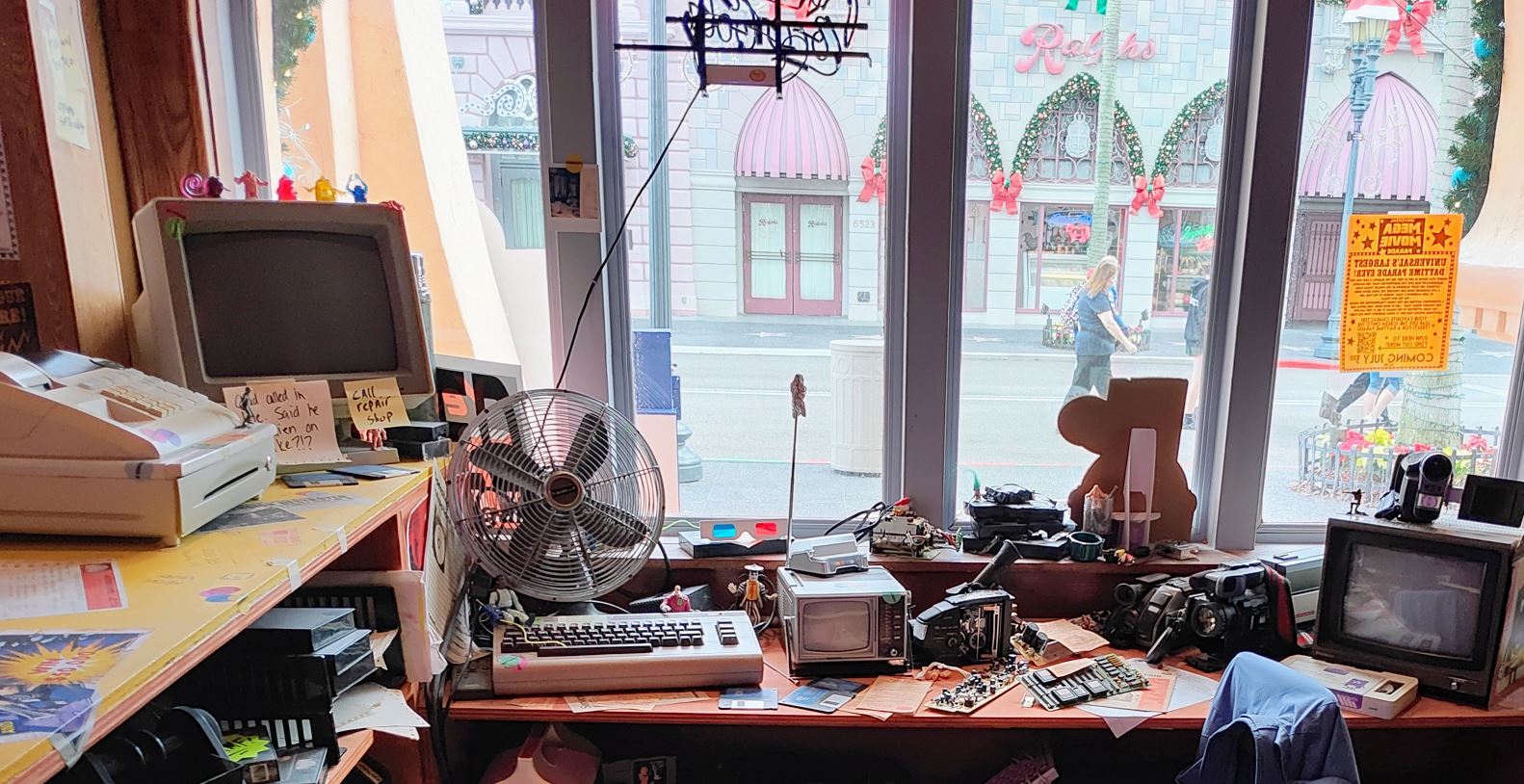
I don’t think this is going to have the effect they are intending.