
Looks like Huey would be subscribed to c/nolawns
- 45 Posts
- 103 Comments
Joined 6 个月前
Cake day: 2026年1月27日
You are not logged in. If you use a Fediverse account that is able to follow users, you can follow this user.

 1·5 天前
After rereading it, a better description would have been my lips were glued shut, as I took a bite on the skin, which I later learned, has a lot of latex, but the bonding wasn’t strong enough to last more than a dozen seconds or so
If you avoid the skin, and unripe fruits (which has even more latex), you’ll be fine
 9·8 天前
I’d like to push back a little on your second paragraph, as most of the listed things mentioned can be remediated with appropriate planning/actions. Of course every case is a different one, this always depends on the local context, but as a general rule:
Trees are expensive to maintain
If you plant native trees, that usually isn’t a big problem, as they have been adapting themselves to those conditions for thousands of years
in addition to cracking sidewalks and roads
You can always select appropriate trees species that don’t have such aggressive root system that tends to crack them
they need water
Once again, native trees are your best bet, in conjunction with water harvesting techniques, I don’t think it will be a problem. I always recommend Brand Lancaster and Andrew Millison work on this subject. See Harvesting Rain Water for more details
If you prefer video format:
“Free water was illegal… He changed that…” [19m15s]
YT link, non YT linkthe leaves need to be cleaned up
I always find this a weird obsession, why do we have to clean them up? In a forest, it usually lies on the floor and becomes nutrients, habitat, reduces water evaporation from the soil, protects the soil from erosion, etc
they need to be trimmed
This one depends a lot on the context, but at least around here, trimming usually means butchering trees and making them completely unbalanced, which makes the population even more upset as your point below becomes the likely scenario
they pose a liability risk so need to be covered by insurance
Healthy trees are not likely to cause problems. Again this one depends on how the city deals with it, but routine check ups should be more common
Considering all the benefits greenery has in our lives, I still think we come out way ahead with it in the long term, even if we were only looking at it from an economic perspective


Sounds cool. Did you DIY? Do you have to move often?
I don’t think pitch is a problem as those plants cling to trees at 90° and the layers are glued, but I understand it is not a solution that can be installed anywhere :)
 2·10 天前
I just watched the video about the geoship and I got curious about it as well.
He talks about the cure time being really quick but wouldn’t you still have to fire them?
In the initial design, they mention they do not need to fire them. The reaction of the materials was an exothermic process that quickly raises its temp to around 60°C, idk if it goes higher than that. See non instagram link video
Another thought is that this seems like it would be terribly insulated. Like wouldn’t the ceramic be conductive?
At least from recent materials on the socials, they use an R-30 insulation between the panels. The video doesn’t show nor mention it, so I’m not sure if this might be a recent change
but the ceramic frame itself seems like it would not be great. I wonder if it would be possible to use timber for the frame?
You might have been onto something, as they seem to have changed their frames. They look different now as seen here
Before:

After:


Besides, there is all this secrecy around this magical powder they use to make this special bone-like material that it is hard to know exactly what is going on.
After some digging, I want to share this too, as I found this comment on YT by @johnturner8286 about what it might be, so Iĺl post it here too.
The cement is called Calcium Phosphate Potassium Cement (CPC) It’s a geopolymer, that once wetted cures by reacting with an acid such as phosphoric, oxalic, acetic or citric acid. It doesn’t have to be made with hemp, you can use wastepaper from a recycling facility too. The fibers make it very tough and strong; you could beat on those walls with a two-pound sledgehammer without breaking through. This same product can be made into furniture; even the frame inside upholstered pieces, tacked and stapled to secure the upholstery! If treated with a catalyzed finish it can be used directly as a sink, bathtub or floor.
It can also be made into wall panels, plates and studs for low-flame-spread, one-hour-fire-resistant, woodless construction in a more conventional platform-framed homeAt 2:04, there is a table showing MKP, which might be Monopotassium Phosphate, and considering it MKCP also has applications in nuclear¹’², oil and gas³ industries, our friend @johnturner8286 might be right. Per Table 1 of link ³, it might be a system MgO–KH2PO4 with MgKPO4•6H2O and MgHPO4•3H2O as hydration products
For the curious, this paper also talks about potential ratios in the mixture for a different version with silica, but the article is too new and I couldn’t find a free version:
New magnesium cement optimized in MgO-K2HPO4-SiO2 system and its hardening performance¹ Magnesium potassium phosphate cements to immobilize radioactive concrete wastes generated by decommissioning of nuclear power plants
² Calcium silicate phosphate cement with samarium oxide additions for neutron shielding applications in nuclear industry
³ 2015, Adhesives Technology Handbook Sina Ebnesajjad PhD, Arthur H. Landrock
I’ve seen green roofs on bus stops and favelas in Rio, Brazil, where their roofs have terrible infrastructure. From what I understood, they basically partnered with a local university to try to reduce the heat island effect in favelas, as most of them had no greenery at all
They came up with a cheap solution involving a plastic liner, similar (perhaps the same) to those used in ponds; a geotextile layer of bidim, which is a lightweight material; and plants that don’t need soil to grow, like those found growing on rocks or trunk of trees. Which means it is super light and still provide the same benefits as a green roof with soil in it
 1·14 天前
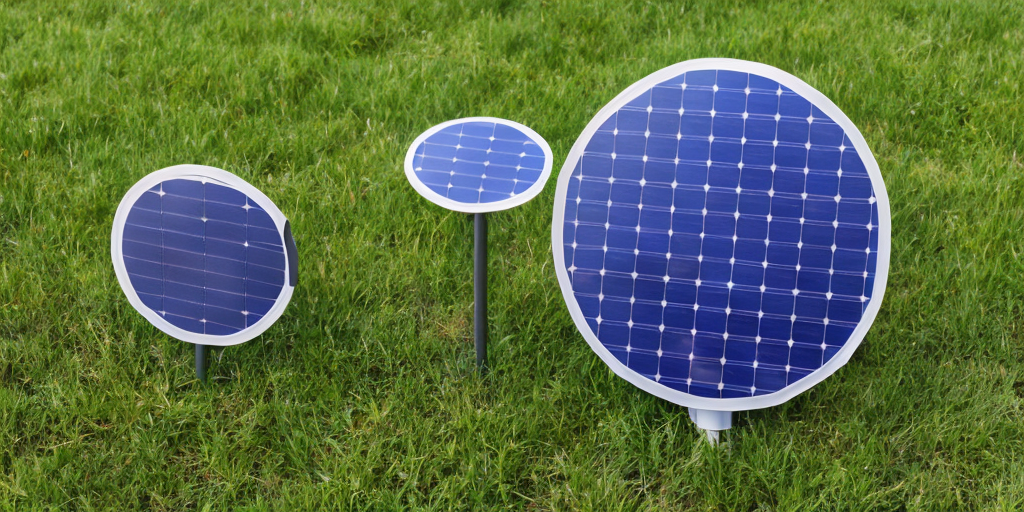
My house being a dome lacks a traditional roof for solar panels,
Can you solder? You could probably go that route if you don’t mind losing your round(?) dome aesthetics. I’ve seen some adaptations where regular rails were put in place and then additional supports soldered into the structure to lift it up and fit into irregular areas
 5·15 天前
How big is your battery? Are you using LiFePO4?
How heavy is each cluster(?)?
 1·19 天前
Help out an untrained eye here: what am I looking at? What kind of tree and herbs are those? Is there a cooperative interaction between them?
Owls, and other raptors, can also be great allies. Provide them with a safe nesting spot, specially if you have cats around
You can buy them, or DIY. Here is an example from the University of California:
PDF warning: Barn Owl Nest Box Plans

Those fake window shutters look so weird

Another bit of good news. My measurements were wrong and I can fit four rails up there instead of the three I assumed. That’s also why the panels are off-center on the mount. That brings me to 4 KW instead of the 3 I mathed out
Thatś definitely a good problem to have, the more the merrier if your inverter can handle them
figure out which direction I’m going to run the DC cables
Where did you end up placing them? Is it getting direct sun light?
Eventually I want to replace the manual transfer switch with an automatic switch that I can run from anywhere.
Forgive my ignorance, but what kind of switch are we talking about here? Is it one of those that commutate between solar and utility corp? Are you looking for a remotely activated switch?
 1·28 天前
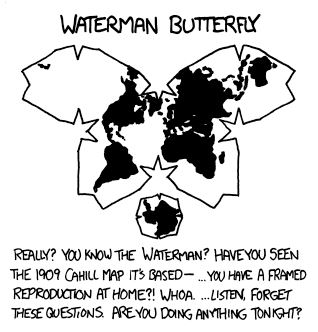
I’m surprised to see some low pitched roofs in the mix, like 14 and 25. Would anyone know why? Perhaps due to smaller roof area?
 2·1 个月前
Do it, and post updates to let us know how it goes :)
 1·1 个月前
It works quite well, but you might need to dig deeper than that depending on your soil conditions. If you have the time and room to dig, you should watch Tech Ingredients video on it:
“Turning a $150 AC Into a Super-Efficient Geothermal Unit!”
YT: https://www.youtube.com/watch?v=s-41UF02vrU
Non YT: https://inv.nadeko.net/watch?v=s-41UF02vrU
I wonder if a ratchet strap would be a way to apply a fair bit more force on the cheese press without having to spend much money on the setup.
You can use almost anything, just watch out for spillings and droplets, as it can quickly get things smelly. When you do high volumes, you want stuff that’s easy to clean, but as a casual dabbler, I just use whatever is easily available
 3·2 个月前
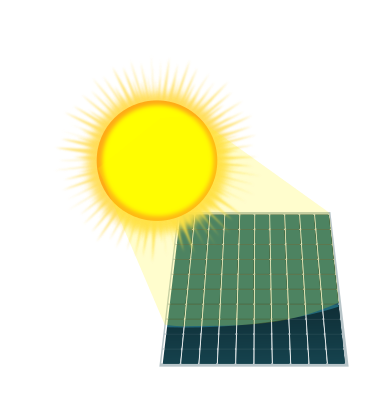
You can still grow stuff in them with agrivoltaics. You don’t have to lose the productive land below it




















As you mentioned, we can already see USB-C charged batteries for power tools out on the market without all the proprietary charging crap from other platforms. As an example, see Greenworks Pro 24v, 4 or 8 Ah and/or Hyper Tough brand
I also haven’t looked at all the specific bells and whistles, but Torque Test Channel on YT has a couple of videos opening them up and testing them, and they do have a circuit board inside the bidirectional charging batteries (either 21700 or 18650 cells), which charges at 65w, and the port also has a little silicone(?) flap to cover it when unused. Perhaps it might be useful as a reference for your trials
See below video “Even More Problems for Big Brands from Walmart”, around 30s mark as an example:
non YT link
YT link
For the adapter, perhaps you could use this open source terminal_v2 as a reference on the battery side? This one is for Ridgid batteries specifically, so you will need to fiddle with part A to adapt it to your brand battery connector. They used a Molex 44262 series connector on the contacts with the battery for reference.
On the other end, it has anderson connectors, but you could adapt it to xt## depending on your preferences/availability
If you don’t want to open/cut the tool itself, perhaps a dummy + xt/anderson connector on the tool side to connect into terminal_v2 on the batteries side?
Ridgid dummy example from the same author.
Disadvantage of dummies is that you would need one dummy for every brand you have to use
Above dummy also has a dangling cable. I’m not a designer, otherwise I would look into having the dummy with an xt## built into it, than have part B from terminal_v2 have the other xt## built into it, which slides/locks/connect into the dummy. I’m not sure if that was clear, sorry
The author also made a video showcasing the terminal_v2, dummies, and other features that might be useful, see “Build a battery adapter to power the whole Lab”, as it might help:
non YT link
YT link
If you want to go the OpenBox route shown in the video, this bushing might also be useful, discussed around 22m10s on the video above