

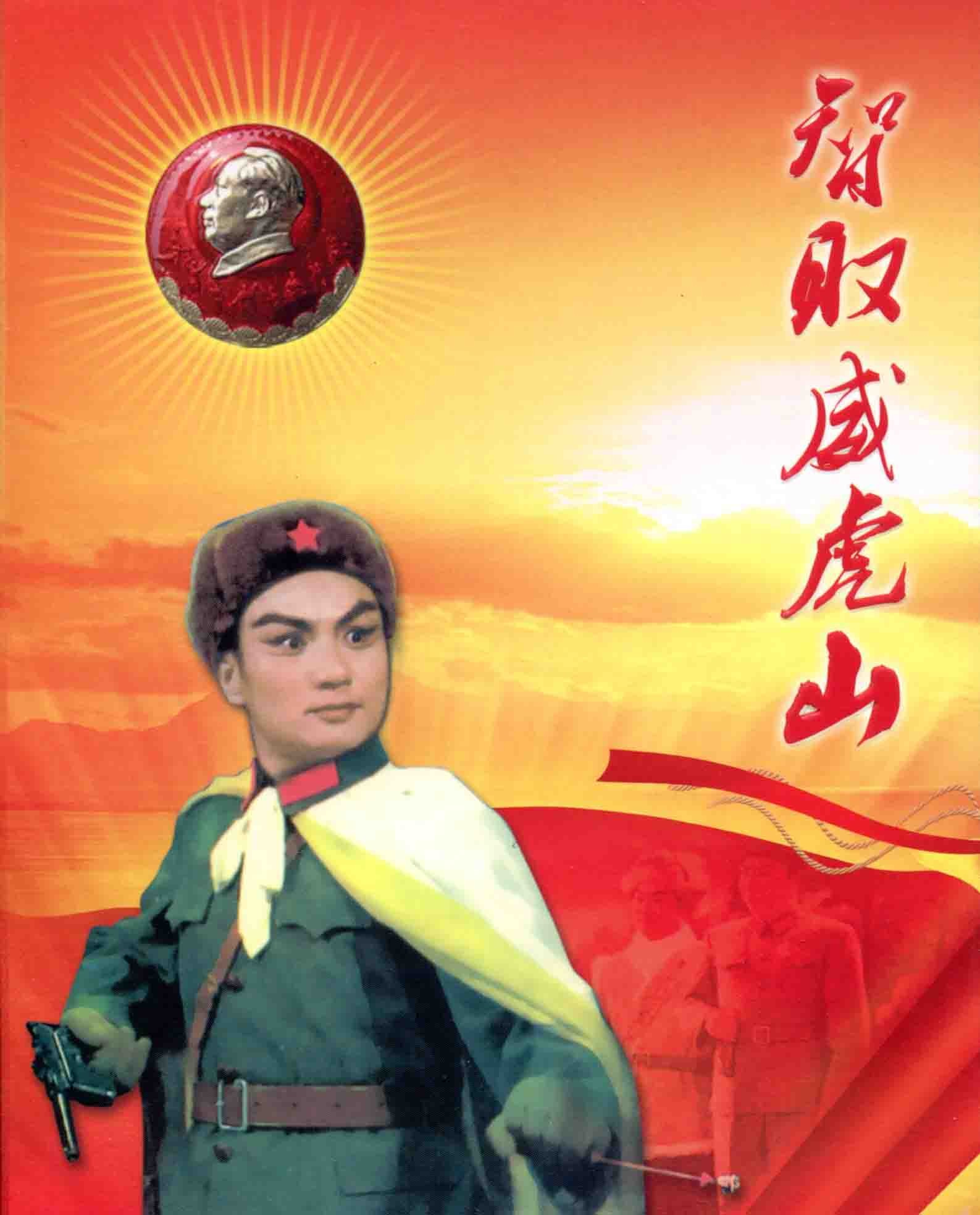
Taking Tiger Mountain by Strategy (1970)/ 智取威虎山 / Zhi qu wei hu shan
This film is complete propaganda, but that’s okay. It’s not like the U.S. and other countries didn’t have propaganda movies (I’m looking at you, Private Buckaroo). The possible difference here is that rather than studios ‘choosing’ to support our troops and getting free help from the military, here the government – specifically Mao’s wife, Jiang Qin, who was highly influential in the Cultural Revolution – was explicitly looking to create “eight model operas”. This was the first of the set. Several were shown each year – even in small villages – and attendance may not have been exactly compulsory, but it was easier to go than explain why you did not. Because of the close-to-national attendance, this may be the most watched film of all time with a supposed view count of over seven billion views before the internet expanded its reach.
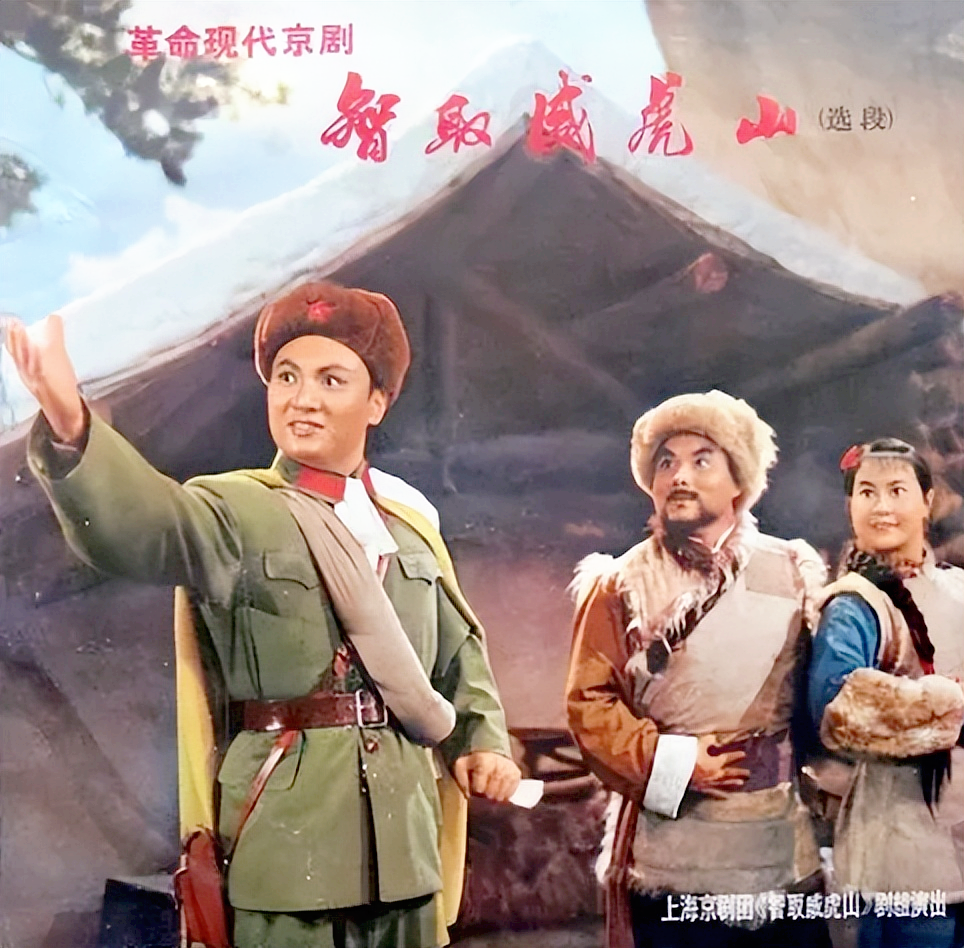
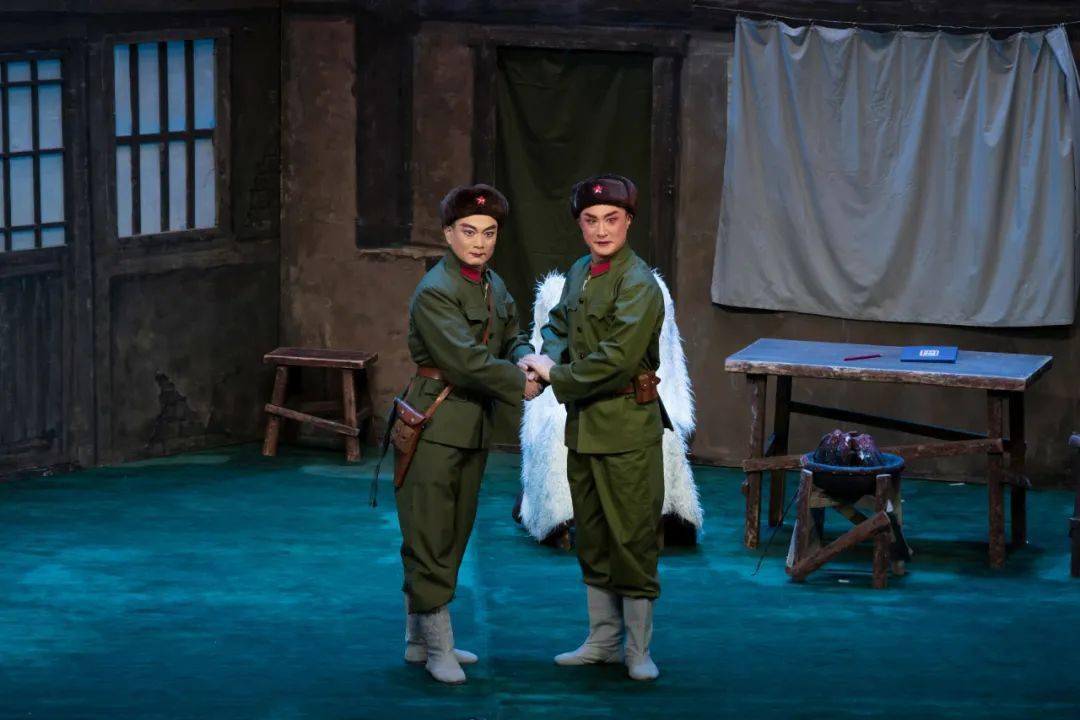
Based on a novel from the 50s, Taking Tiger Mountain by Strategy and directed Xie Tieli, the film is basically a filming of the opera with close-ups and a variety of shots and camera work to keep it from becoming overly static. Set during the civil war in 1946, the opera follows a detachment of the People’s Liberation Army in Manchuria searching to eliminate a group of bandits which are hiding in well fortified camps in the mountains. Along the way, we meet bandits, soldiers, and common people who may be suspicious at first, but soon see the correctness of Mao’s plan, and are eager to help the army get rid of the bandits.
The music and action is traditional and as it would be seen on a stage with evocative set design. When the story calls for riding a horse, the dancing denotes riding and horse whinnies are heard in the distance of the orchestra, but no horse is onstage. When there is fighting, the dance become acrobatic with leaps and lifts to connote feints and conflicts. Throughout, the message is how the People’s Army is making things better, and how ready the public is to work hard to make a better tomorrow.
While the spectacle is initially thrilling, viewers are unlikely to stay transfixed as they see the same sort of thing over and over. The beginning is heavy with dialog that may require a quick rewind to read the subtitles, but there are points that the film drags. The resolution is satisfying, but a forgone conclusion. This might not be the greatest film ever made, but since it is probably the most viewed, it is worth seeing if only for historical reference.
Oh, one other thing: Musician Brian Eno used the same title for one of his albums. 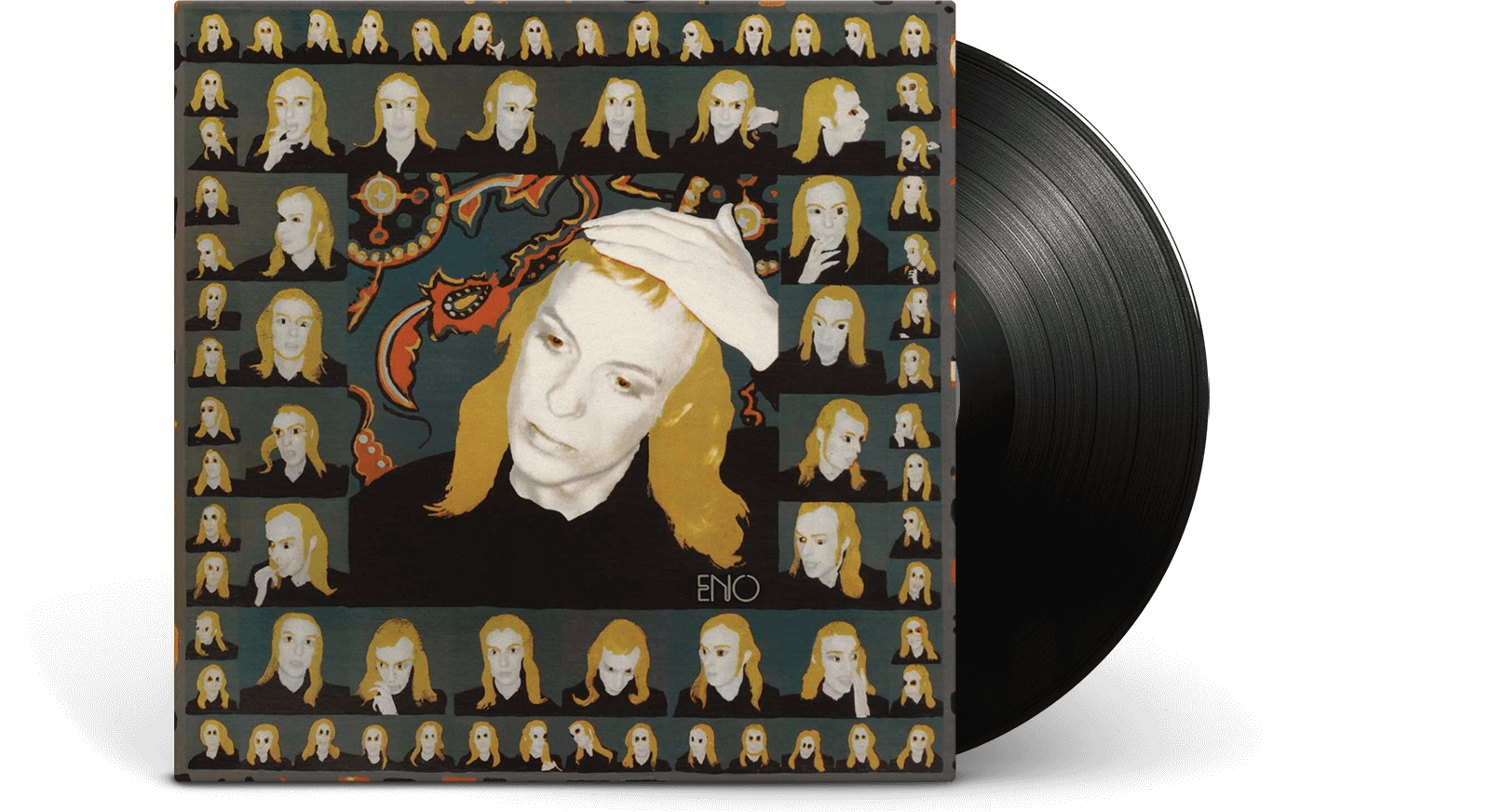
You must log in or # to comment.