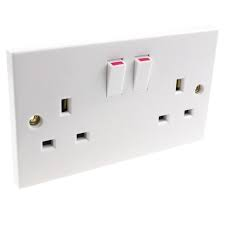

They’re like that in this apartment we’re renting and I keep seeing them elsewhere. I don’t get it.
To turn them on and off.
Fair enough
deleted by creator
Big if true.
Massive if correct
Large if accurate
Wee if wrong
I remember when I was young and bending down all the time was a thing you could do painlessly. Ah, youth.
Have you tried using your toes?
You can use your toes for switches.
Not when there are no switches and you have to pull out the plug everytime you want to switch off the appliance.
deleted by creator
I present to you my favorite YouTube person:
The GFCI/RCD, a simple but life saving protector:
https://youtu.be/ILBjnZq0n8s?list=PLv0jwu7G_DFU62mIGZNag5vQ0a6tDGBpO
In defense of the Switched Outlet:
Electrical topics playlist:
https://youtube.com/playlist?list=PLv0jwu7G_DFU62mIGZNag5vQ0a6tDGBpO
I could just watch this guy all day lol
I expected Technology Connections or ElectroBOOM, was not disappointed.
One teaches what to do, the other teaches what not to do.
ElectroBOOM keeps me alive sometimes, and Technology Connections told me how to properly use a dishwasher.
A fellow human of great and distinguished taste I see
the UK power grid is weird. mostly due to echoes of the war. used to be that, to save copper, the entire house and sometimes multiple houses on a street would be wired as one big loop of wire, no fuse box or anything. that’s where the individually fused plugs and switched sockets come from. then, since it turned out to be quite a good idea for safety, they kept doing it.
This is the answer. When all sockets are connected to one big loop, there’s fuses in each socket to prevent a device from screwing with the whole system.
Sorry but I’m going to need a source on that because there is no evidence of that being the reason UK plug sockets have switches
Other countries have switches on their sockets, Australia being one because I live here
Switches on sockets do make a ton on sense though for safety reasons for example if you need to quickly isolate electricity from the switch and the breaker hasn’t done anything
Switches also prevent arcing when you pull out a plug if an appliance doesn’t have an off switch and you can switch something off that you use commonly say a kettle but don’t unplug because you use it commonly so theirs less chance of an electrical fault happening while no one is there and its also the same reason I’ll demand an isolation switch be installed on electric stoves just incase the dail on the stove fails and the stove turns on
looking for a source is not hard. anyone can do it.
switches are not required by the bs1363 standard. the provision for them only arrived in the 1960s. there.
This isn’t strictly true. Most houses built between WWII and the '90s were built with sockets that didn’t have switches on them. It was only later safety regulations / suggestions that made the switches preferable.
Where I live was built in the late '80s right before switched sockets became more common. All the original sockets have no switch. Some in the kitchen have switches, but it’s clear these were added at a later date.
I’m not sure of the exact rulings and where and when a socket must have a switch, but you can still find switchless sockets for sale at the sorts of retailers who sell those sorts of things, so there are definitely places where those sockets are still allowed.
Why are people saying this?
I’ve lived in multiple UK houses and never once seen a socket with a fuse. Are you saying this was change way way back in the day?
All houses have fuse boxes (which then got upgraded to circuit breakers). Not one fuses in sockets. Would be a fucking nightmare to take the socket off and change a fuse.
sloppy wording, i meant “switched sockets and fused plugs”.
The fuse is actually in the UK plug (the big brick-like thing with the wire on it), not the socket. But yes, it’s a thing, and most of the rest of the world considers it overkill. Also a lot of cheap junky equipment (ironically the stuff where you’d most want the fuse) omits the fuse in the plug, go figure.
Yea I know, I’ve wired a plug.
Never seen a fuse in a socket though. That comment is completely wrong and yet it’s the most up voted reply.
Never seen a house without a fuse box either.
Didn’t the uk used to have appliances without plugs that you’d need to wire yourself If inrecalling that Tom Scott video correctly
Yes. I believe that’s true but I’ve never done it myself.
No fuses in the switch box though, it’s a box of circuits breakers
Yea I know, I said that.
People still call them fuse boxes though.
I am not sure if I mispoke or misread. Apologies for implying ignorance, I just wanted to dump my mind
The used to be - I had a flat that used an old style fused breaker. Fun times trying to replace a fuse when it had blown…
Lol yeah can only imagine what playing ‘hunt the bad device’ would’ve been like back when those boxes had actual fuses on them. (That’s the game where the main circuit breaker gets tripped and you have to figure out first what ring it’s on, and then which specific item is tripping it)
So that switch will trip like a breaker?
No - there’s fuses in the plugs themselves, the switch is largely for convenience and safety - if you want to unplug something broken and potentially live, it’s much safer to switch it off at the wall than risk a shock given the current limit is on the breaker is so high
Are folks able to replace the fuses without exposing live parts? I totally get the safety angle.
fuse is in plug and accessible only when plug is disconnected
it’s also a very weird thing because fuses are supposed to protect what is downstream of them. so effectively fuse in plug protects cord and appliance only, not the wires in the wall. there’s breaker box for this
It is safer for the fuse to be in the plug for those people who think they are electricians and end up causing house fires or bzzzt’ing themselves
i understand that it’s remnant from times when fusebox wasn’t a thing and it was an attempt at protecting ring circuit, that’s all. it makes little sense
To turn shit on or off
deleted by creator
Allows you to remove power from the plugged in device without unplugging it. This provides convenience to easily and quickly turn things on and off and prevents arcing when unplugging.
That’s exactly what I do, because it’s more convenient than unplugging everything.
I live in South Africa, where we had rolling blackouts (called loadshedding) for a few years. It’s easier to switch everything back on when the power comes back than to plug it back into a socket without a switch, especially with my fucked up spine.
The electricity in the place I live was done poorly, so having something plugged in “live” risks a surge or something and then the appliance gets fucked and then everything smells like burnt plastic.
And that’s the best case scenario. Others have had housefires.
Also, the South African plugs aren’t pleasant accidentally to step on. It won’t pierce your foot, but it can still hurt like a motherfucker for a few seconds if you step on it in the wrong way.
Those UK plugs do look a lot more nasty to step on. I shudder at the thought.
I like the EU and US two prong cables ( 🔌?) where the prongs are parallel to the cable, but not the cables with the orthogonal prongs.
I like the EU and US two prong cables ( 🔌?) where the prongs are parallel to the cable, but not the cables with the orthogonal prongs.
Non-grounded plugs aren’t that great, though, and once you add the third prong the plug gets much less flat. Compare:
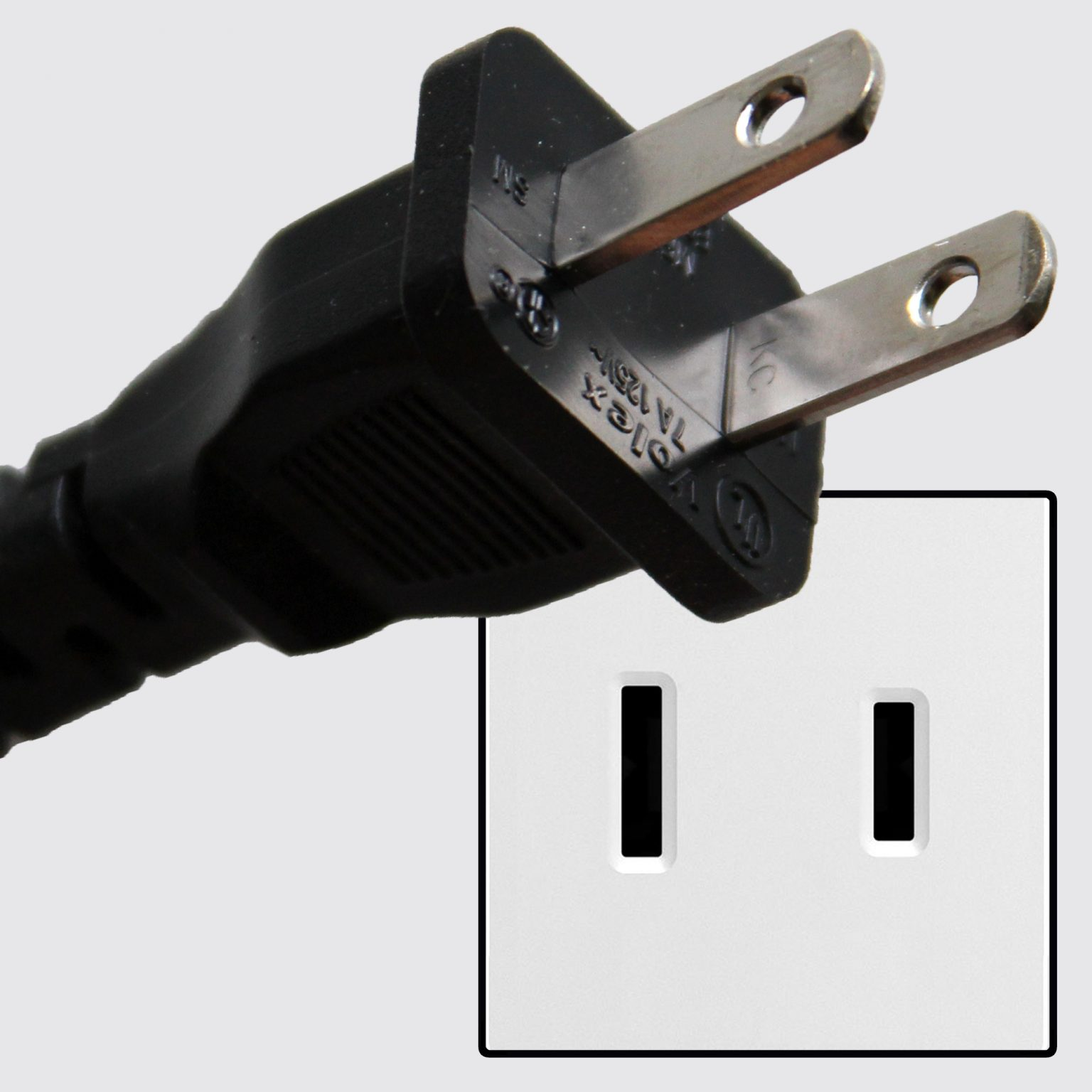
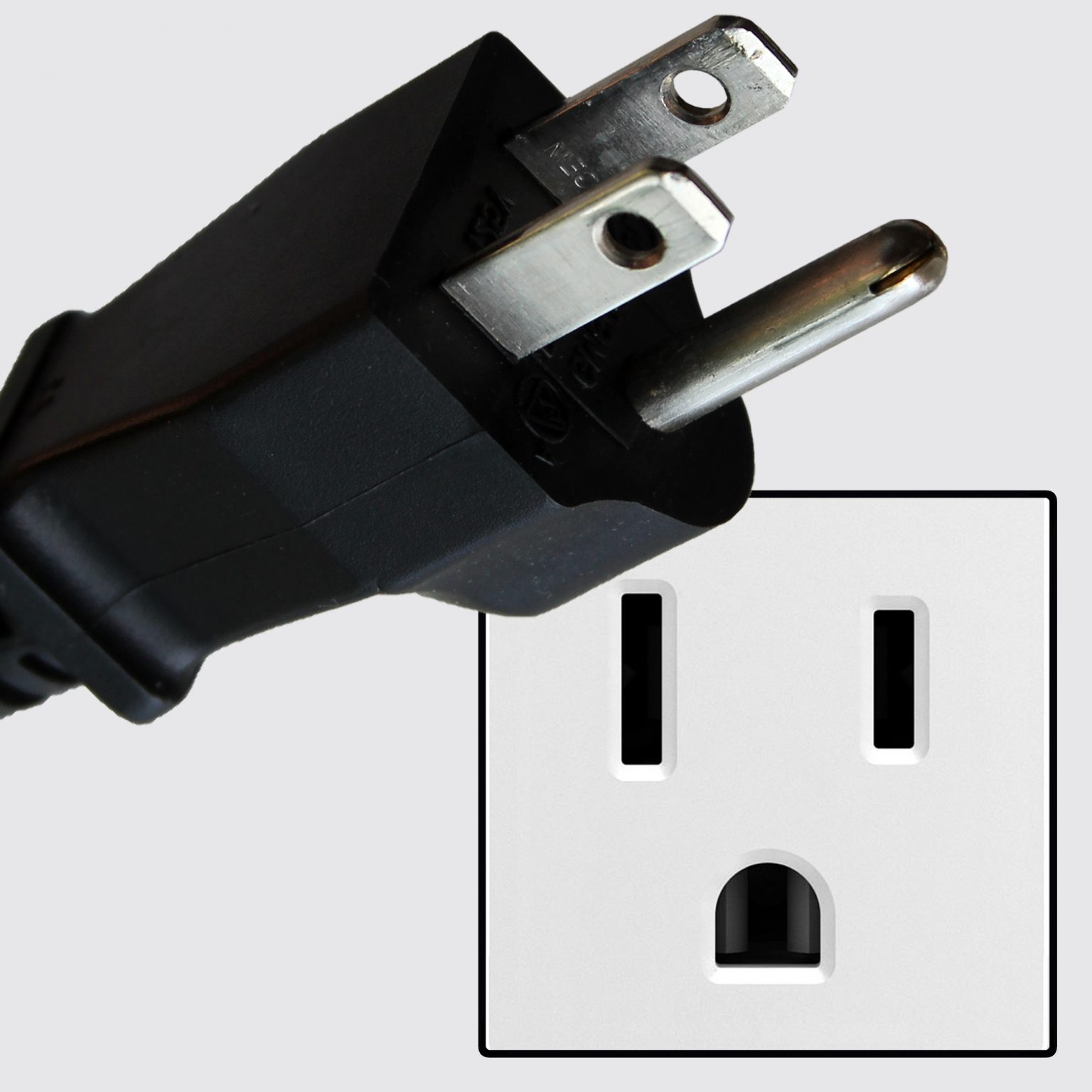
Maybe Italy and Chile have the best idea in terms of slim grounded plugs, although the lack of polarity might be a problem?
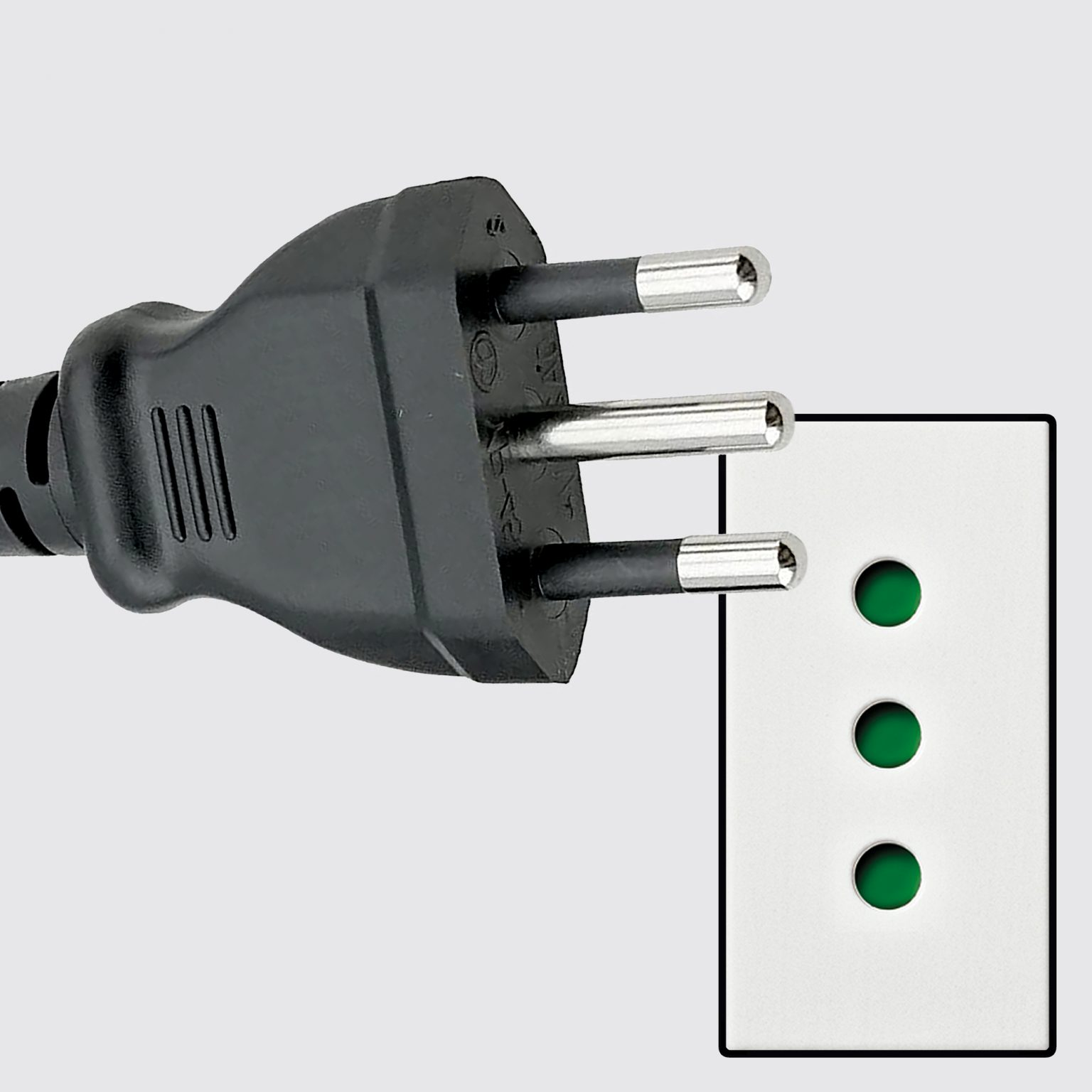
Also, IMO right-angle plugs are often better than straight ones because you can put furniture closer up against them and do so without stressing the cable.
why would the lack of polarity be a problem? the outlets only deliver AC, and everything plugged into them are made for AC.
I gotta admit I don’t entirely understand it either, but people claim it matters. ¯\_ (ツ)_/¯
https://www.physicsforums.com/threads/why-is-the-correct-polarity-important-with-ac.979324/
right-angle plugs are often better than straight ones because you can put furniture closer up against them and do so without stressing the cable.
Yeah that is definitely a huge bonus. I’ve taken it for granted.
We’re slowly adopting three pronged Italian/Chilean-type plugs that will be “backwards-compatible” with the EU plugs. I have no clue about polarity or anything like that.
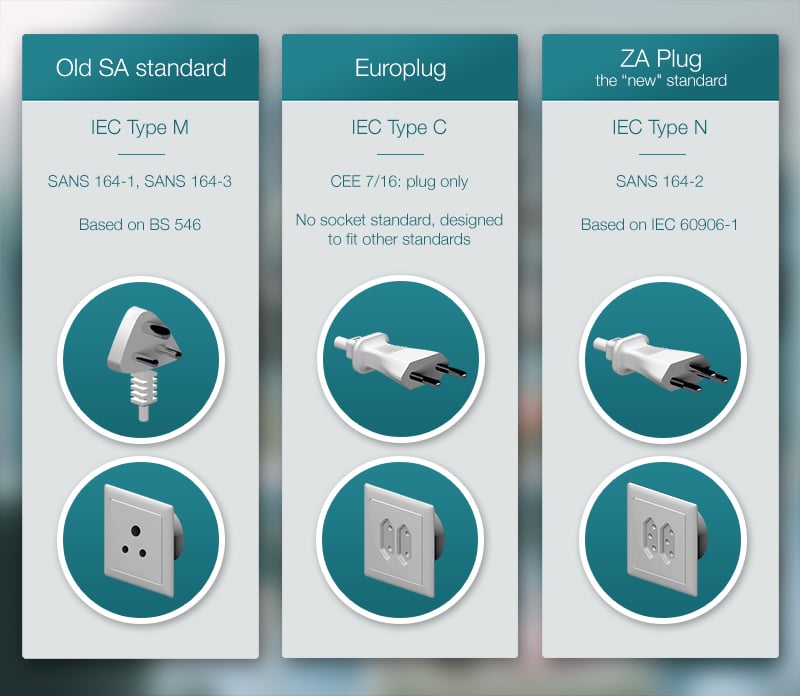
New sockets include em. The original three pronged socket is kind of a hazard. Kids can stick their fingers in there. Not sure how that got approved.
exciting to stand on
Thanks, I hate it.
How many devices do you have that don’t have a switch on the device itself?
Makes sense, American lie voltage (outlets) are 120V. 240V is considered high voltage and isn’t typically fed into residential units. Plugging anything rated for 120V into a 240V outlet is gonna be a bad time, and is why the outlets for high voltage are shaped differently.
I was gonna guess that the switches were too negate so-called vampire power, which is when a truck’s of electricity flows into appliances that are normally off. IMO that trickle is so negligible in a residence that is 6 effectively irrelevant, but that’s just here in the US. I don’t know anything about foreign electrical systems.
240 is used all the time for furnaces, driers, and increasingly EV outlet connections.
It’s just all our “normal” stuff is 120.
I wish our electric kettle outlets were 240. I’m unreasonably jealous that other places in the world can boil water faster!
I think you can have it, but you’d need to spend a pretty penny.
All it would take is calling an electrician to run the appropriate wiring from the place you want the kettle plugged in to you breaker box, connect it to the breaker box with the appropriate breaker, cap off the other end with the appropriate plug (a 240V plug does exist in America), and then buy a kettle capable of receiving the rated voltage and current and splice on the appropriate plug (because I presume you won’t find one sold with that plug).
An extremely expensive way to save maybe three minutes boiling water, but you can do it.
UK household electricity is pretty spicy compared to many other places - it has more safety features as a result. (3 pinned fused plug, socket switches etc)
deleted by creator
The rest of Europe has 220V as well and they don’t have switches on their outlets.
How is it more “spicy” than anywhere else in Europe?
The many other places is the US
And Japan, and Canada, and Mexico, and the majority of South America, and a handful of countries in Africa and the Middle East.
I was mainly referring to almost all of the American continent(s), lots of Africa, China and a few other places too. I didn’t think I’d mentioned Europe.
I have been with 110v plenty of times used to wire houses in my youth. Been hit once with 220v knocked me on my ass for 3 days. I stopped being so cavalier after that I wish they had those outlets vs the midevil outlets the US has.
So we can turn the power on and off.
Why else would you have a switch next to a power socket?
Most of the places in the world I have been to do without them, or at least did when I was there, so it confused me. But some people have given good explanations now.
Open one up. There’s also a fuse connected to the live wire. The amperage is dependent on the normal draw of the appliance. Just added safety features. Also the live and neutral holes only open up if you put the earth in first (that’s why it’s longer). British plugs are arguably the safest… Unless you leave them prongs up and step on it accidentally. That makes stepping on Lego feel like a shag carpet.
It seems a bit overengineered for little gain compared to good old schuko imo
You were down voted for whatever reason. These outlets are complete bullshit. You have your safeties in the electrical cabinet and then you make sure to wire your house according to certain standards. Schuko is leagues ahead of this crap. Modern Schuko sockets will only allow anything to enter, when both prongs are inserted at the same time. If you do happen to short anything, the FI switch (no idea what it’s called in English) will cut the power before anything can happen.
for anyone reading: FI -> RCD
Why can’t you just unplug it? If you have to go to the socket anyway… maybe I don’t understand because I’ve never lived with the convenience?
Depends on the device.
Something like a vacuum, sure. You’re probably going to move it around anyway.
But I used to have a Spectrum computer, and it had no power switch. If you plugged it in then it was just on. Much simpler to power off at the switch than unplug it and risk the plug falling down the back of the table into a rats nest of cables.
Plus I guess it’s one more step a toddler needs to do to electrocute themselves…
Even if you unplug it, the socket is still live at more than 200 V.
Maybe this was meant to be a joke, but that’s not how it works. If it were the switch would also not do anything, because what the switch does is exactly the same as unplugging the thing, i.e. cut a piece of the wire out.
Edit: unless you meant for safety reasons, in which case the shutter inside is a lot safer than the button.
The real question is why did the UK decide that on the outlet itself is the best place for that switch, as opposed to e.g. in the US where outlets are sometimes wired to a switch located next to the door to the room?
Having a switch next to the door would be useful if you’re using that socket for a lamp but not if you’re using them for anything else. In my kitchen the sockets for my under counter oven and fridge are under the counter and the switches are above it so I can easily access them.
This is virtually standard in Australia
Depending on who built the house, it’s the standard for a “good” house in Ghana, Nigeria, Zambia and I think Kenya.
It is standard in NZ
“so many”?
isn’t it all of them?
No not all of them.
Source, I was born here.
All of them in the UK.
i live in malta, we inherited your plugs and sockets. Never seen one without a switch over here. Til
For safety I guess?
I don’t get how that makes it safer.
So when the dumb person tries to insert a fork in the plug, they don’t die electrocuted.
Have you seen the list of safety features on UK plugs and sockets? The sockets have shutters in them that prevents anything being inserted into the live or neutral sockets unless the (longer) earth pin of a matching plug is inserted first.
Having said that, I agree: seems to be a belt-and-braces approach. No downsides.
And it allows you to cut power to an appliance without having to remove the plug.
As any cautious parent could tell you, these are helpful when the toddler starts sticking things in places where they don’t belong. Such as metal cutlery. In the power sockets.
This isn’t the reason.
The switch is more likely to attract a toddlers attention. Some have little red lights even. It would be false sense of security at best. You can get those plastic blank plugs to stop your kid putting a fork in there.
The switch is so, if you kid is being electrocuted by putting their fork in the toaster, you can turn it off at the wall without having to touch the electrified kid.
Don’t toddlers start pressing buttons even earlier? Not sure this alone could protect them
True, but this is at least a little safer
Safety and convenience versus the cost of including them, I expect.
The Wikipedia page for BS 1363 says they’re optional and weren’t added to the standard until 1967. I can’t recall having seen a domestic socket without one.
But it seems the only legal way to read the actual standard is to pay for it, and even the HSE website isn’t much help.
So basically, this concept was invented by a committee.
Yes. Welcome to the UK. You will need to adjust to small aggravations such as this. Good luck.
Yes, but what’s your point here? “Oh no, someone preserve us from… *checks notes* a group of subject matter experts!”?
If that annoys you for some reason, you’d best not learn how the overwhelming majority of products and services see the light of day. Rage aplenty awaits.
I didn’t have a point, I had a question. And it doesn’t annoy me, I just didn’t know why.
Why are people giving me shit for asking a stupid question in the stupid questions community? Is there a supremely stupid questions community I should have asked instead?
Your original question was answered by numerous people in the spirit of the community, so you have got best answers it can provide at the moment, but your follow-up comments suggest that you don’t think so.
But I may have misjudged your intent, as looking further I can see you’ve been replying to comments individually. My initial impression was that you were masquerading statements as questions. If I have that wrong, then my apologies.
Great for turning off a device or several devices without having to unplug (e.g. if the sockets are behind a bookcase, this is much more convenient). Not a super common need but when it saves moving furniture it helps. Given that UK switches are tougher to plug in and unplug than most (due to safety features), I prefer using a switch. Also, the switches are cheap and give more options, so may as well!
I rely on one for a light where the switch broke and wasn’t easily replaceable, so being able to fall back on the mains switch meant I can keep using the light.
It’s not about having a switch it’s about having the switch right next to the plug instead of next to the doorway (where it usually is in the US)
You have a switch for your electrical sockets by your door? What a weird place to put them all.
We have our light switches by the door. Much more useful.
Having grown up with it I missed those tbh. Makes saving power easier lol
Does it? Can’t you just turn off the device instead?
A lot of devices can be turned off, but they still use power. So you can waste electricity even though the devices are “off”.
Things like normal table lamps aren’t the problem, it is stuff like TVs, computers, stereos, etc.
yes.
Im from the states and live in Ireland. Here, people unplug lamps when they leave for the weekend. Dozens of times, I’ve had to plug lamps back in when coming into the office over a weekend or things like Christmas break.
I’ve also had to explain to at least 5-6 people that something that does not draw power by being plugged in, such as a toaster, electric kettle or light fixture (unlike a computerized device that has a stand-by mode) is not “wasting power” unless you unplug it or turn the outlet switch off.
I had a person at a party tell me their father was an electrician and taught her to turn the switches that lead to anything such as lamps OFF when they’re not being used because it costs electricity to “keep the wire charged”. True story.
Mainly they exist because there weren’t central fuse boxes for a while due to wartime copper shortages.
turn the switches that lead to anything such as lamps OFF when they’re not being used because it costs electricity to "keep the wire charged
Lol what a donkey. For anyone that’s unaware, your meter spins when current is flowing, when a device is actively using power. If there’s no current flowing, the meter isn’t spinning. Just because a wire has potential doesn’t mean it’s actively drawing current, it only means it’s ready to do something, and any device that has the main feeder going through a physical switch (ie no standby like a computer or tv) has zero current path when the switch is open/off. Even devices in standby are drawing such a negligible amount of power that it doesn’t matter.
My mom used to unplug everything all the time, and it took years to convince her that’s not how that works. She only finally got it when I became an electrician.
You can test this theory yourself if you have a multimeter. Select ohms/continuity, and put the leads across the two prongs. If there is a resistance value present, it will draw current. If it says OL or 0 ohms, that means open line and it won’t draw anything.
the only thing that would make a shred of sense would be reactive power from plugged but unused transformers and the like, and for this reason you should disconnect these when not in use. but the only loads of this type that matter are welders and such